Wednesday, 22 February 2017

Radio Active Iodine 131 Alert over Europe!

Announcement delayed a month. Why?

1/5 [february 20 2017] No health concerns following the detection of   in Europe in January 2017 https://twitter.com/radioprotection/status/831156476735430658 

Oh that's OK then!


From: http://www.zerohedge.com/news/2017-02-20/french-nuclear-watchdog-gives-update-mysterious-radioactive-iodine-blanketing-europe - 20.2.2017

The emission was rumored(sic) to have originated close to the Arctic circle, with some speculating that a nuclear test of emergency had taken place in Russia in January and the fallout then spread to Norway and onward to Europe:


"Iodine-131 a radionuclide of anthropogenic origin, has recently been detected in tiny amounts in the ground-level atmosphere in Europe. The preliminary report states it was first found during week 2 of January 2017 in northern Norway. Iodine-131 was also detected in Finland, Poland, Czech Republic, Germany, France and Spain, until the end of January", the French Institute de Radioprotection et de Süreté Nucléaire wrote in a press release.

Adding an air of mystery to this alleged "incident" was the spotting of the "Constant Phoenix", which as we first reported, arrived on Friday in the UK's Mildenhall airbase from Florida. The WC-135 Constant Phoenix has been used in the past to determine whether nuclear tests or detonations have taken place in any given region. The WC-135 is a derivative of the Boeing C-135 transport and support plane. Two of these aircraft are in service today out of the ten examples operated since 1963. The aircraft are flown by flight crews from the 45th Reconnaissance Squadron from Offutt Air Force Base while mission crews are staffed by Detachment 1 from the Air Force Technical Applications Center.


http://www.leehealth.org/HealthInformation/graphics/images/en/9806.jpg


Oh! So who's releasing radioactic iodine into the European atmosphere now? 

Conveniently blamed on Russia of course. Beware NATO FALSE FLAG.


See: http://travel.aol.co.uk/2017/02/22/radiation-spike-europe-nuclear-test-fears/


From: https://toxnet.nlm.nih.gov/cgi-bin/sis/search/a?dbs+hsdb:@term+@DOCNO+7395
Toxicity Summary: 
There are 36 isotopes of iodine having masses between 108 and 143. Only one isotope is stable (iodine-127); the remaining are radioactive. Most of these have radioactive half-lives of minutes or less. Twelve have half-lives that exceed 1 hour, and six have half-lives that exceed 12 hours (iodine-123, iodine-124, iodine-125, iodine-126, iodine-129, and iodine-131). Four isotopes (iodine-123, iodine-125, iodine-129, and iodine-131) are of particular interest with respect to human exposures because iodine-123 and iodine-131 are used medically and all four are sufficiently long-lived to be transported to human receptors after their release into the environment. The U.S. population has been exposed to radioiodine in the general environment as a result of atmospheric fallout of radioiodine released from uncontained and/or uncontrolled nuclear reactions. Historically, this has resulted from surface or atmospheric detonation of nuclear bombs, from routine and accidental releases from nuclear power plants and nuclear fuel reprocessing facilities, and from hospitals and medical research facilities.


See also: http://www.wakefieldexpress.co.uk/news/environment/mysterious-radioactive-cloud-moves-towards-uk-as-plane-which-tackled-chernobyl-called-in-to-find-source-1-8407845


Reblogged from: http://www.sciencealert.com/no-one-can-figure-out-what-s-behind-a-mysterious-radiation-spike-across-europe


No One Can Figure Out What's Behind a Mysterious Radiation Spike Across Europe

It appears to be linked to pharmaceuticals.
BEC CREW
21 FEB 2017

Small amounts of nuclear radiation spread across Europe last month, and no one can figure out why.
First detected over the Norway-Russia border in January, the radioactive Iodine-131 bloom was then found over several European countries, and while unsubstantiated rumours of nuclear testing by Russia have been cropping up, officials say it's most likely linked to an unreported pharmaceutical mishap.

When asked why Norway didn't inform the public last month, when it was the first to detect the radiation in its northernmost county, Finnmark, Astrid Liland from the Norwegian Radiation Protection Authority told the Barents Observer:
"The measurements at Svanhovd in January were very, very low. So were the measurements made in neighbouring countries, like Finland. The levels raise no concern for humans or the environment. Therefore, we believe this had no news value."
As France's nuclear safety authority, the IRSN, announced last week, the actual amount of radioactive Iodine-131 in Europe's ground-level atmosphere in January "raise no health concerns", and has since returned to normal.
But what's most disconcerting about the event isn't the level of radiation that spread through Europe - it's the fact that no one can say what actually happened.
iodine-detectionIodine-131 (value +/- uncertainty) in the atmosphere. Credit: IRSN
What we do know is that Iodine-131 has a half-life of just eight days, so detecting it in the atmosphere is proof of a recent release.
"The release was probably of recent origin. Further than this, it is impossible to speculate," Brian Gornall from Britain's Society for Radiological Protection told Ben Sullivan at Motherboard.Right now, the best bet is that the origin of the radioactive Iodine-131 is somewhere in Eastern Europe - something that conspiracy theorists have latched onto as evidence that Russia performed a nuclear test in the Arctic. 
But there is no evidence of this taking place, and the fact that only Iodine-131 - and no other radioactive substances - were detected strongly suggests this is not the answer.
"It was rough weather in the period when the measurements were made, so we can't trace the release back to a particular location. Measurements from several places in Europe might indicate it comes from Eastern Europe," Liland told the Barents Observer.
Based on the particular isotope, experts are saying it's far more likely that the radiation spike is the result of some kind of pharmaceutical factory leak, seeing as Iodine-131 is used widely in treating certain types of cancer.
"Since only Iodine-131 was measured, and no other radioactive substances, we think it originates from a pharmaceutical company producing radioactive drugs," Liland told Motherboard. "Iodine-131 is used for treatment of cancer." 
And, oddly enough, the case for pharmaceuticals being behind the mess has a surprisingly similar parallel to back it up - an almost identical event occurred in 2011, when low levels of radioactive Iodine-131 were detected in several European countries for a few weeks.
At the time of the announcement, officials were also at a loss to explain the spike in Iodine-131, but quickly ruled out a link to nuclear power plants.
"If it came from a reactor we would find other elements in the air," Didier Champion, then head of environment and intervention at the IRSN, told Reuters in 2011.
Interestingly, a paper came out just last week confirming that the source of the 2011 Iodine-131 leak was a faulty filter system at the Institute of Isotopes Ltd in Budapest, Hungary, which produces a wide variety of radioactive isotopes for medical treatment and research.
The investigation is still ongoing for the 2017 leak, with the US Air Force deploying its WC-135 nuclear explosion 'sniffer' aircraft to the UK last week to help narrow down the source.
Hopefully researchers can nail down what exactly happened here, so factory owners - if they are to blame this time around - can ensure these kinds of leaks don't continue.
Because while both events posed no health risk to humans, it's really not something any manufacturer should be risking.


From: http://www.health.harvard.edu/blog/thyroid-cancer-a-hazard-from-radioactive-iodine-emitted-by-japans-failing-nuclear-power-plants-201103141867
The human body is surprisingly good at absorbing iodine and storing it in the thyroid gland. That’s a problem when iodine-131 is released into the atmosphere. The thyroid stores it as readily as natural, non-radioactive iodine. As iodine-131 builds up in the thyroid gland, it emits bursts of radiation that can damage DNA and other genetic material. Such damage can remove the normal limits to cell growth and division. Unchecked growth of thyroid tissue is thyroid cancer.

Iodine-131 gets into the body several ways. A person can breathe in radioactive steam released by a nuclear power plant. Fallout—radioactive particles that fall out of the atmosphere and settle onto plants, soil, and water—further adds to the burden when a person eats iodine-131 enriched fruits and vegetables or drinks water containing the isotope. Milk is another vehicle—cows that eat grass sprinkled with iodine-131 make milk that contains it.

Following the explosion and meltdown of the nuclear reactor at Chernobyl in 1986, follow-up health studies showed a significant increase in thyroid cancer in the area around Chernobyl, especially among children who were under 10 years old at the time of the explosion and those in utero. Youths may be most affected by iodine-131 because their thyroid glands are still growing and developing. Fortunately, as cancers go, thyroid cancer is one of the least deadly. In the United States, only about 5% of people who develop thyroid cancer die of the disease. (Researchers aren’t yet sure if this applies to radiation-induced thyroid cancer.)

As my colleague Peter Wehrwein describes in a related post, taking potassium iodide pills can help keep iodine-131 from taking up residence in the thyroid gland. The seafood-rich Japanese diet provides an abundance of iodine. Because the thyroid glands of those affected by fallout from the failing nuclear power plants may be “full” of natural iodine, iodine-131 may not be able to get into the gland, giving them natural protection against radiation-induced thyroid cancer.

http://www.greatbarrierreef.org.au/wpcontent/uploads/2013/12/1fukufirejpeg

and then of course there is this ongoing catastrophe with the actual potential to make all sea food radioactive and if not inedible, highly dangerous to eat. Yes folks no more 'fish and chips'!

http://simplecapacity.com/2017/02/fukushima-radiation-damage-video/
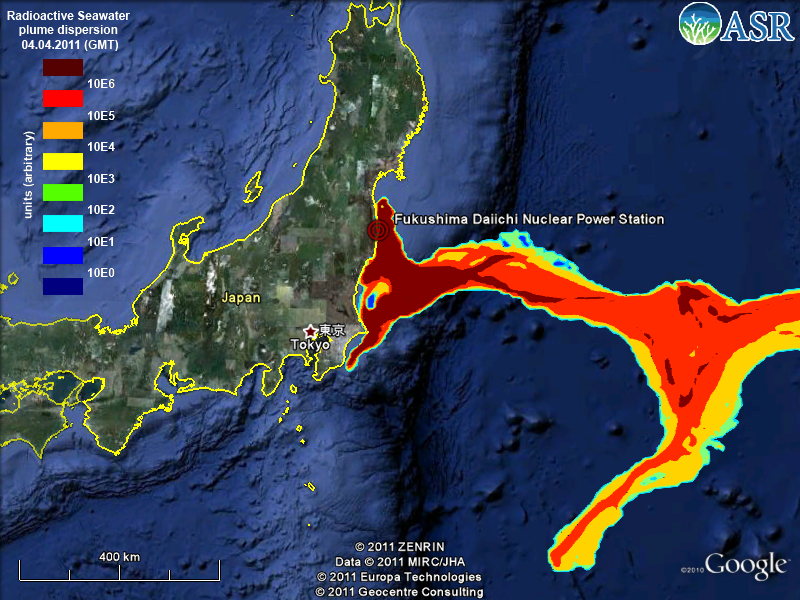

https://www.henrymakow.com/upload_images/ocean-contamination.png

Why has there been no INTERNATIONAL response to this potentially life ending disaster?


http://www.globalresearch.ca/articlePictures/fukushima_radiation_nuclear_fallout_map.jpg


See also: http://www.agreenroadjournal.com/2014/06/epa-raises-allowable-radiation-in.html?m=1

Thursday, July 7, 2016

EPA Raises Allowable Radiation In Drinking Water By 27,000 Times, Allows 1 in 1.7 People Cancer Rate, Canada 7 MILLION Bq/M Radiation Allowed In Drinking H2O

EPA Raises Allowable Radiation In Drinking 
Water By 27,000 Times, Allows 1 in 1.7 People Cancer Rate, 
Canada 7 MILLION Bq/M Radiation Allowed In Drinking H2O


INVISIBLE FUKUSHIMA HEAVY METAL RADIOACTIVE 
POISON SHOWED UP IN US DRINKING WATER AND AIR, 
BUT NO ONE WAS WARNED OR TOLD TO TAKE ANY 
PROTECTIVE ACTIONS

Monday, 20 February 2017


Bush on Kennedy – Worth Repeating?


Reposted: Friday, 20 February 2015

Bush on Kennedy – “I come to bury Caesar, not to praise him” by Tim Veater.


It has been reported from Dallas (oh the irony) George W. Bush has eulogised the
life and work of John Fitzgerald Kennedy on the fiftieth anniversary of his
assassination. He is quoted as describing the events of Nov. 22, 1963, as a
“dark episode” in American history, adding “Kennedy dedicated himself to public
service and his example moved Americans to do more for our country.” Bush, who
lives in Dallas, said, “the 35th president believed in the greatness of the
United States and the righteousness of liberty – and defended both”.


Anyone who has followed the events of that portentous day, and those that
preceded it and came after, might be excused a sardonic smile. (Surprise, given
the events of the last fifty years, are simply not permitted!). However the day
a Bush sings the praises of a Kennedy, and particularly these Bushes and
Kennedys, has probably never been equalled in literary imagination since Brutus’
famous speech on the death of Caesar as recounted by Shakespeare:


“There is tears for his love; joy for his
fortune; honour for his valour; and death for his
ambition. Who is here so base that would be a
bondman? If any, speak; for him have I offended.
Who is here so rude that would not be a Roman? If
any, speak; for him have I offended. Who is here so
vile that will not love his country? If any, speak;
for him have I offended. I pause for a reply.”


Ah! The ace card of patriotism – “the last refuge of the scoundrel” as Samuel
Johnson coined it. Who would dare impugn the reputation of the state to do
deadly deeds against its own? Yet Brutus did indeed plunge the dagger into
Caesar’s breast.
As Mark Antony put it:
O, what a fall was there, my countrymen!
Then I, and you, and all of us fell down,
Whilst bloody treason flourish’d over us.
O, now you weep; and, I perceive, you feel
The dint of pity: these are gracious drops.
Kind souls, what, weep you when you but behold
Our Caesar’s vesture wounded? Look you here,
Here is himself, marr’d, as you see, with traitors.


America is a great country and its citizens are justly proud of its
achievements. Such is the degree of patriotism that anyone suggesting the
possibility of treachery is immediately labelled a conspirator or worse. Even
after fifty years, the Institutions of the American State, have remained largely
impervious to the monumental pile of evidence that points not only to a detailed
and intricately planned conspiracy to kill the President, but active involvement
of the highest echelons of State administration itself.


The Warren Commission set up to inquire into events and produce the conclusion
that Lee Harvey Oswald was the assassin and worked quite alone and without
assistance of any kind, can now be seen for what it was, a fix. Yet the fudge
has remained incredibly resistant to attack, despite the circumstances of the
event, the multitude of witnesses uncalled to give evidence or who’s statements
were altered, evidence was tampered with, State laws ignored, photographic and
other evidence denied, an autopsy interfered with, Oswald’s extraordinary
background and claims he had been set up before being shot by a known Mafia
boss, the disappearance or death of a swathe of people involved, the way a
subsequent prosecution by the New Orleans district attorney Jim Garrison
(subject of Oliver Stone’s famous film) was obstructed at every stage by state
functionaries, forensics that flatly contradicted the official story – the so
called “magic bullet”, recorded deathbed testimony by E
Howard Hunt (see http://www.rense.com/general76/hunt.htm ), one of the
Watergate break-in team and a CIA operative in Dallas on the day and possibly
one of the shooters. And so we could go on. That the Warren Commission would
report as it did is hardly surprising. It had on it the ex-Director of the CIA,
Allen Dulles, who Kennedy had sacked only a couple of years before and was known
to hate them.


Worryingly we have seen many of the characteristics of the Kennedy assassination
and subsequent Warren investigation replicated in the 9/11 Commission.
Significantly in neither was a systematic criminal investigation instituted or
criminal convictions obtained. A list of alleged conspirators is so extensive as
to be mind-blowing. (see http://www.indymedia.org.uk/en/2008/09/409701.html )
Clearly the Kennedy assassination was carried out without the President’s
knowledge and consent. Could 9/11 have been similarly effected or was Bush fully
cognizant? Bizarrely he didn’t hasten away when told in the classroom but then
went completely incommunicado in Air Force One – effectively a Commander in
Chief out of touch! Meanwhile his Secretary of Defence Rumsfeld is seen playing
the hero on the lawn outside the Pentagon. You really could not make it more
bizarre could you?


So getting back to Bush junior’s “damning with faint praise” soliloquy, a much
more personal question hangs in the air. Did his father have any knowledge of or
involvement in Kennedy’s death? If he did, we would have the highly unusual and
frankly sinister situation of two Bush family members, father and son, both
Presidents of the United States, with deep and enduring interests in oil and the
Gulf, instituting aggressive wars against Iraq, and connected, even if
peripherally, in two of the most infamous incidents of U.S. domestic history of
the last half century.


Many world events wash over us unremembered. Some have a certain iconic power to
remain embedded in the memory. For anyone over the age of ten at the time,
Kennedy’s assassination is such an event. It is almost apocryphal that there is
not one in the world who cannot remember where they were and what they were
doing on that November day. With one notable exception apparently. George H.W.
Bush, with a first class intellect, when asked where he was when Kennedy was
shot, replied vaguely that he was “somewhere in Texas.”
(See http://www.wnd.com/2013/09/did-george-h-w-bush-witness-jfk-assassination/#SSrq0UQMgB5rFF2p.99
)


Detailed subsequent research has provided a possible explanation. First he was
at the time employed by the CIA, and second he was in Dallas on the day! (See
http://www.wnd.com/2013/09/did-george-h-w-bush-witness-jfk-assassination/ ) Now
how would you forget that? To forget working for the government and being
present at the scene of the crime (by his own admission he wasn’t anywhere else
that he could remember) is rather suggestive of something untoward. Bush’s name
was found in the papers of George De Mohrenschildt, one of Lee Harvey Oswald’s
CIA handlers and is referred to in other documents that place him in Dallas on
the day of Kennedy’s murder. Richard Nixon later hand-picked him as Republican
National Committee chairman, in which role he constantly covered-up and
stonewalled for his boss about Watergate. In 1975 he was appointed Director of
the CIA by President Ford but only remained in it for a year later becoming
Ronald Regan’s running mate and winning the Presidency
for himself in 1988.
Larry Chin
Online Journal Associate Editor of rense.com in “Hunt’s Deathbed Confession
Reveals JFK Killers” (http://www.rense.com/general76/hunt.htm )makes the
assertion:


“Beyond any reasonable doubt, the US government murdered John F. Kennedy. There
are people still alive today who were involved directly and indirectly
implicated. Some are probably even serving in positions of high influence. Some
still have never been identified or touched.” The precise involvement of Bush
Senior has never been disclosed but multiple sources suspiciously indicate there
was at least some.


In similar vein, it is now clear beyond peradventure, 9/11 replicated elements
of the Kennedy killing in terms of a dangerous internal cabal that has never
been brought to justice because evidence has been destroyed and a police
investigation has never been instituted. And all this when the diffident Bush
Junior was President.


Well I never did!


ANTONY: “Friends, Romans, countrymen, lend me your ears;
I come to bury Caesar, not to praise him.
The evil that men do lives after them;
The good is oft interred with their bones;
So let it be with Caesar.” END.

Sunday, 12 February 2017

Is this the real reason why the Government is threatening to "abolish" the House of Lords? Not towing the official line on Syria.


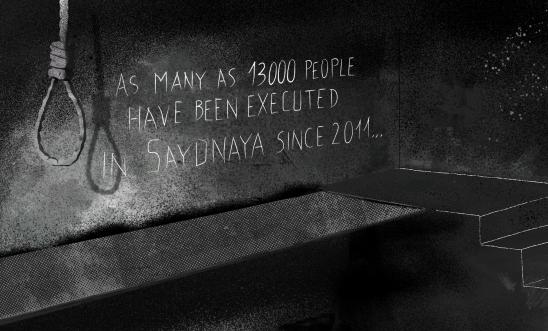
https://www.amnesty.org.uk/sites/default/files/imagecache/poster/236282_saydnaya_executions_report.jpg


(See: https://www.yahoo.com/news/m/98151a78-676e-3a75-9ac4-9eb38720a5a3/ss_u.k.-government-threatens-to.html )

How reliable/unbiased is this Amnesty report? https://www.amnestyusa.org/sites/default/files/human_slaughterhouse.pdf

Assad rejects Amnesty claims: http://www.independent.co.uk/news/world/middle-east/syria-regime-bashar-al-assad-saydnaya-prison-amnesty-international-report-false-mass-executions-a7568401.html

An alternative view: https://www.voltairenet.org/IMG/pdf/CaesarPhotoFraudReport-3.pdf

From Hansard:


09 February 2017
Volume 778
    Question
    Asked by
  • My Lords, I am profoundly grateful to all noble Lords who are speaking in this debate and to those, such as my noble friend Lord Wright of Richmond, who have expressed their support but are unable to be present. I am also grateful to another former British ambassador to Syria, Peter Ford, who has provided invaluable briefing.
    My concerns arise from a visit last September in response to invitations from the Melkite Patriarch, the Grand Mufti and leaders of Christian and Muslim communities in Aleppo. Our programme was arranged by friends in Syria and was not organised by the Government. We met many Syrians in Damascus, Aleppo, Maaloula and Latakia, including representatives of Muslim, Christian and Yazidi communities; members of government and internal opposition parties; civil society organisations such as the senior council of doctors in Aleppo; IDPs in Latakia who had fled for their lives from ISIS and ISIS-related militias; and survivors of ISIS attacks in Maaloula.
    We also met President Assad, a meeting for which we received vehement criticism in the media and by the FCO. We stand by our decision to meet the President, not because we are uncritical but because only by meeting can one raise concerns and learn about current and proposed policies.
    Many noble Lords will have seen newspaper coverage this weekend condemning Assad for atrocities—including the killing of 13,000 people in Saydnaya prison—citing a report attributed to Amnesty’s Beirut office. Time permits me only briefly to address three issues related to those allegations.
    First, the fact of torture in Syrian jails is well known, is cause for genuine concern and is in no way condoned, but there is a serious asymmetry in these reports. There is no mention of the conditions under which Syrian soldiers and many civilians are held by Islamist militants or of the atrocities perpetrated by those militias, including torture, beheadings and slaughter of civilians by suicide bombs. When we were in Syria, a suicide bomber attacked the checkpoint at Homs, killing more than 30 people, presumably including families burned alive in their cars in the queues. Secondly, these reports are accepted uncritically as true. However, in 2014, photographs of an oddly similar number of corpses were proven to be a farrago of half-truths. The third issue is timing. The report, apparently a year in gestation, emerges now, when it can do maximum harm to the chances of success of the peace process emerging out of the recent talks in Astana.
    The report by our group which visited Syria is widely available and I want to highlight our priority concerns, which are still relevant despite the seismic changes which have taken place since September. First, everyone to whom we spoke in Syria was deeply disturbed by the UK Government’s commitment to regime change. But Her Majesty’s Government retain their unabashed commitment to a transition culminating in the departure of President Assad. Transition is therefore just a euphemism for regime change.
    Leaving rights and wrongs to one side, it is delusional to pretend that Assad will have to step down. Following the recovery of eastern Aleppo, he is now in a commanding position on the battlefield, with domestic and external support bolstering his position. HMG should realise that were Assad to do as they wish, the first to suffer would be the Syrian people. Everyone whom we met was deeply afraid that Assad’s departure would cause implosion of the regime, leading to catastrophes similar to those in Iraq and Libya. I ask the Minister why Her Majesty’s Government are not listening, for example, to the faith leaders in Syria, both Christian and Muslim, almost all of whom are urging the international community to engage with the Syrian Government.
    Secondly, there is widespread, understandable dismay and anger over the UK continuing to provide opposition Islamist militias with practical assistance, including training, equipment, help with propaganda and diplomatic support. Helping to sustain the armed opposition can only prolong the suffering of the Syrians to no purpose whatever. So many people told us: “War is terrible. People die from shelling on both sides. But here, you die from shelling or you die from shelling and beheadings. And we don’t want the beheadings”. I therefore ask the Minister why the UK is continuing to support the Islamist “rebels”, when the consistent word from the Syrians, who have suffered under their brutal tyranny, is that the “moderates” no longer exist and the vast majority of these groups have extreme ideologies and no intention of creating a democracy in Syria.
    Thirdly, there has been widespread dismay over the long-standing reporting by the BBC and other Western media which is perceived to be very biased, focusing on the suffering resulting from military offences by the Syrian and Russian armies, with no comparable coverage of the suffering inflicted by ISIS and other Islamist military offensives, including the use of cluster bombs and chemical weapons. The latest case of indiscriminate abuse of an innocent population has been largely ignored by the Western media. It is the month-long poisoning by diesel fuel, and later the complete cutting off, of the water supply to Damascus by so-called moderate jihadists between late December 2016 and late January 2017. Water supplies were restored only after the Syrian military diverted significant forces from other fronts and retook the Wadi Barada springs from the jihadists in a major military attack.
    The bias in media reporting seems to be intent on demonising President Assad and his Government and drawing a veil over the atrocities perpetrated by the Islamist forces. On 13 December the House of Commons held an emergency debate on Aleppo. The Foreign Secretary underlined condemnation of the offensive against eastern Aleppo, the importance of protecting civilians and an ongoing commitment to bring about a political settlement in Syria. That statement by the Foreign Secretary raises many questions. Why do the vast majority of civilians from east Aleppo chose to flee to government-controlled areas if they are all so terrified of the Government, apart from a small minority who joined the evacuation of terrorists to Idlib? Why, after months of lamenting the plight of 300,000—a grossly exaggerated figure, by the way; it turned out to be 130,000—civilians in east Aleppo, has there been so little media coverage of what had actually been going on?
    Reverend Andrew Ashdown, who organised our September visit, was in Aleppo as the city was liberated. He visited areas of east Aleppo including the Jibrin registration centre and other reception centres, as tens of thousands of refugees from east Aleppo fled to government-controlled areas. I quote from his report:
    “The voices of the civilians emerging from ‘rebel’-controlled East Aleppo were absolutely consistent—of the brutal murder and execution by the ‘rebels’ of anyone who opposed them; the killing of men, women and children who tried to flee; regular torture and rape of civilians; the withholding of food to civilians, or selling food at exorbitant prices; the withholding of medical aid to those in need even when they begged for assistance; telling civilians that they would be killed by the army if they fled to government-controlled areas; and, that if they did not adhere to the ‘rebel’ ideology, they were not real ‘Muslims’ but were ‘infidels’ and deserved to die. Also those refugees who fled from East Aleppo who knew of the widely acclaimed ‘White Helmets’ (many didn’t) repeatedly said that ‘they only helped the terrorists’. They were all visibly delighted to be free, and were being given food, medical assistance and shelter on arrival. The narratives of these people directly contradict all that the western media were reporting for months previously”.
    In the last month, efforts at restoring facilities, opening schools and making areas of eastern Aleppo habitable have already begun. Many people are asking why no one is reporting these positive developments in post-conflict situations in east Aleppo.
    Her Majesty’s Government’s position is coupled with an insistence on maintaining sanctions. These greatly harm Syrian civilians, who cannot obtain medical supplies such as prostheses, more than they harm the Government. It is also sometimes claimed that Assad is not really fighting ISIS. To that, I say: tell that to the brave defenders of Deir ez-Zor, the people of Palmyra or the inhabitants of Damascus and the Homs countryside, for whom all that stands between them and beheadings are the government forces.
    I take this opportunity to record that the people of Syria are profoundly grateful to Russia for taking ISIS seriously and assisting them by defending their people against its barbarities. I ask the Minister: what is Her Majesty’s Government’s position with regard to the Astana talks, which appear to be the only current initiative likely to deliver a policy capable of defusing the present situation?
    In conclusion, I open this debate with a heavy heart and with deep sadness because I have seen a glimpse of the suffering of the people of Syria under the onslaught of ISIS and related Islamist jihadists. I am all the more sad because I have seen that suffering exacerbated by UK polices of support for the jihadists, and I am deeply saddened by Her Majesty’s Government’s continuing commitment to regime change, by whatever name, which is profoundly dreaded by the people of Syria. Will Her Majesty’s Government reconsider their entrenched position, which has exacerbated the suffering of the people of Syria, and allow the people of Syria the democratic right and the dignity to choose their own future? If that involves re-electing President Assad, that is their right to do so and a right that we should respect.
  • My Lords, I congratulate the noble Baroness, Lady Cox. She is absolutely right to highlight the extent of the humanitarian horror of the Syrian crisis. I applaud her for her efforts on behalf of the Christian community that is left there, and in essence agree with her vision. I personally mourn the death of a great friend, the Archbishop of Aleppo, who disappeared and was presumably killed.
    In 2000 I attended the funeral in Damascus of President Hafez al-Assad, representing the Opposition. It was the first time that I met his son Bashar, and there were great hopes that he would modernise the economy. Indeed there was some progress, and the new President fully protected the minorities. However, when minor demonstrations broke out in Syria, and after some hesitation, President Assad ruthlessly cracked down, and the rest is history. It was a grotesque misjudgment and wholly unnecessary. Had we and others taken out his capacity to rain cluster bombs, barrel bombs and chemical weapons on his population by bombing his airfields, he would have been forced to the conference table. We never did, though, and our support for opposition groups was limited and sometimes wholly counterproductive.
    As a result of the Russians moving in substantially in 2015, Assad is now on his way back to controlling the country. It is a tragic and ironic situation that the man who had so much to do with the destruction of his country should now be seen as part of the solution. It now appears to be recognised even by us that he is there to stay, as expressed by the Foreign Secretary. However, I immediately praise Her Majesty’s Government, who have so generously committed money to good humanitarian efforts to alleviate the plight of the refugees. We can be truly proud of the generosity, added to by private funding and care. I was very pleased personally to help in raising money for relief.
    However, we are where we are, and we have to face the clear reality. When a recent meeting took place in Astana, it was essentially led by Turkey, Iran and the Russians, whose influence and role in Syria is now decisive. I therefore ask the Minister if she is in a position to clarify what the next stage will be. I understand that additional meetings in Geneva were planned, but which may have been postponed to cement a ceasefire. Do we know if the anti-Assad opposition is to be involved? This would be appear to be essential to make progress, and of course it would be under UN auspices. President Trump has advocated, with the support of Saudi Arabia, the establishment of safe zones to provide some degree of security for refugees. Do we agree with this? I understand that he has commissioned a report to be ready by April.
    Of course there will simply be no progress without the agreement of Russia and indeed President Assad himself. The Foreign Secretary reiterated his view that President Assad ideally should go, but we now have to accept the new reality of his staying. Indeed, all I can say in retrospect is that all of us should pray and yearn for this unspeakable horror and heart-breaking situation to end.
  • My Lords, I also thank the noble Baroness, Lady Cox, for tabling this debate. She spoke about her concerns that arose both during and subsequent to her visit to Syria. My own interest and concerns with Syria go back considerably longer, and long before the war. When I went to see if there was at the time any possibility of rapprochement between Israel and Syria, it was clear that there was. I came back and told the Prime Minister, Tony Blair, but when he sent out Sir Nigel Sheinwald, what was engaged in was the kind of finger-wagging diplomacy that informed the President that if he did not do what Britain wanted, it would be the worse for him. I mention that because it seems to me that the attitude of Her Majesty’s Government to Syria and the regime there has been part of the problem rather than part of the solution, going back a very long way. To come to the view in almost any conflict, particularly in the Middle East which I know quite well, that there are good guys on one side and bad guys on the other, simply lines you up with one side or the other so that you become part of the problem rather than part of the solution.
    When the war itself broke out subsequent to a failed attempt at revolution—indeed, apart from in Tunisia, none of the attempted revolutions in the Middle East has been positive and successful—I urged Her Majesty’s Government not to engage militarily or make any intervention. Of course, the House of Commons subsequently made doing so impossible. However, I agreed that support should be provided for our allies on the front line, Turkey, Jordan, Lebanon and Iraq, because without supporting them the situation would get worse. The Government were not able to engage militarily because of the decision of the House of Commons, but that did not mean that we have not engaged through military training, materiel and intelligence operations which have merely made the situation worse. I recall having discussions in 2012-13 with some of my Liberal Democrat colleagues and one of them saying to me at the time, “John, you say it could be worse, but I don’t believe it could be any worse if we were to intervene”. I replied by saying, “Not only could it be worse, it will be much worse because what we are seeing is a descent into chaos that will not be restricted just to the Middle East”.
    We are already some years into a third global conflict and we are merely contributing to the difficulties around it. It is not really a Sunni-Shia fight because there are Sunnis on both sides. We are contributing to something which, if we are not careful, will ensure that Christians who have been living in communities in the country for two millennia will be driven out.
    My question for Her Majesty’s Government is in many ways a simple one. When will the Government understand that the policy they have been following through several Governments has failed? Continuing with it is not going to help the situation either for the people in the region or for this country because of how it is perceived in the wider region and indeed by some within our own communities. I have just a little hope, given the Statement made recently by Prime Minister Theresa May that it was not for the United Kingdom to engage with the use of force in order to change the way other people run their countries, that perhaps some reflection is beginning to take place in Her Majesty’s Government.
  • I was an eyewitness in Jazira in north-east Syria in May 2015, Diyarbakir in Turkey in November of that year, and in government-controlled Syria in September 2016. I met the Jazira canton administration, all the political parties, young people learning democratic theory and practice, as well as refugees from ISIS. In Diyarbakir I saw military damage to the historic mosque at Sur and learned of the bulldozing of cemeteries where militants were buried. Since then, MPs, mayors, lawyers and journalists have been arrested and tens of thousands of state employees dismissed. Last September, along with others including my noble friend Lady Cox, I visited the four main Syrian cities. I am amazed that Her Majesty’s Government refuse to visit Jazira and Kobane. How can they understand the political and humanitarian situations without direct contact? In Turkey, they fail to address the causes of civil unrest and armed uprising, which have lasted with only short intervals since 1984. Our Government have asked for proportionate measures, and Turkey has replied with field guns and bulldozers, besides aiding and abetting Islamist fighters in Syria.
    Of course there have been atrocities on all sides, yet the western media still place all the blame on the Assadists. No one can deny that outside states have helped many foreign jihadis to enter Syria and provided arms and explosives in large quantities. For these reasons, I welcome the ceasefire agreed by the Assad Government with Russia, Turkey and Iran, although of course it leaves the war against ISIS quite unresolved. I would urge the Minister when she comes to reply to say all she can on that subject.
    The conclusion I draw is that all have lost the war, though Assad and his allies have won most of the battles. He has the support or the acquiescence of most Syrians. All the religious and ethnic minorities prefer him to a possible extreme Islamic Government. All are war-weary; they want to get on with their lives and fear chaos or Islamist dictatorship. For those reasons I urge our Government to re-establish at least some level of diplomatic representation in Damascus.
  • My Lords, I also add my thanks to the noble Baroness, Lady Cox, for giving us the opportunity to discuss the recent developments in Syria. Whatever the Government’s assessment of what is happening there, in a country of shifting alliances and international power play there are no easy or simple answers. There is one constant, though: the misery being endured by the proud Syrian people. I will confine my remarks to the efforts being made to secure as meaningful and sustainable a future as possible for those dispossessed by this awful tragedy.
    Just over a year ago, the world met here in London for the second Syria donor conference, where the huge generosity both in hard currency and in spirit towards those fleeing terror was enormously welcome and much needed. One of the key objectives of our Government, whose commitment to this appalling situation is something of which we should all be proud, is that alongside aid and refuge we need to put in place practical solutions that give Syrian refugees and their families not just hope, but a sense of purpose and a chance to rebuild their shattered lives, and which supports the countries in the region to which they have fled.
    One of the ways we are doing that is through the Business Taskforce, set up by David Cameron and being not just continued but actively supported by the Prime Minister and her Government and chaired by two Secretaries of State, my right honourable friends Liam Fox and Priti Patel. Here I declare my interests as a member of that task force and as the Prime Minister’s trade envoy to Jordan. The task force is charged to secure,
    “an ambitious package of measures that would spur economic growth and enable … Syrian refugees across the region to work”,
    and study. Those are the very people that are needed to rebuild Syria, when this tragedy is one day—soon, I hope—over.
    As well as the enormous sums of money being donated by the Government—to date, £2.3 billion—and the generosity of the British people, so rightly highlighted by my noble friend Lord Risby, a great deal of time, effort and innovative thinking is being put into practical solutions to further these aims. If we support refugee families in the region—who are the very people needed to rebuild Syria, as I said—that will not only build economic capacity in the countries that have so generously offered them refuge, but reduce the risk of too many people gambling their lives in hazardous journeys to Europe and, if they make it, an uncertain future.
  • My Lords, I thank the noble Baroness for securing this debate. My main reason for speaking is to draw your Lordships’ attention and, especially, Her Majesty’s Government, to a recent report by the World Council of Churches, The Protection Needs of Minorities in Syria and Iraq. It is a serious piece of field study that has gathered the first-hand views of some 4,000 people, over 2,000 of them Syrians from minority communities: Christians, Yazidis, Druze, Turkmen and many others. I was in Baghdad and Irbil last month as part of a World Council of Churches delegation to test the findings of the report with community leaders and members, as well as with UNAMI and locally based NGOs, and confirm the soundness of its recommendations. I have every reason to believe that the report’s analysis of the Syrian situation is as credible as we found its Iraqi analysis to be. Therefore I ask the Minister that the Government engage with this robust report.
    It was quite an uncomfortable visit for a British person to take part in, because of the great sense among the minority communities of our own culpability in the chaos in Iraq. I can well imagine the strength of feeling that was expressed in the noble Baroness’s visit to Syria. The research showed that despite the manipulation of sectarian tension in Syria by government and armed opposition, there still remains greater confidence among minority communities—including even Christians—in Syria than in Iraq that they have a future in their land, although that confidence is diminishing. The report argues that protecting the minority communities and preserving their place in Syrian society needs to be mainlined into the humanitarian response. This requires a differentiated approach to the particular security, economic and social needs of diverse communities, based on accurate assessment tools that capture distinctive ethno-religious vulnerabilities.
    Those needs are large and complex; critical among them is housing. It is not only the horrific damage to the property that is the problem but the loss of property, either through being forced into selling at low prices by stronger communities or by confiscation by malign activities. Sensitive processes of property reallocation will need to be found. That is only one example of the restoration of the diversity of Syrian society that will be needed in the years ahead—a task too great for its own resources to bear. Will the Minister therefore confirm that Her Majesty’s Government are committed to the long-term pursuance of a just peace for all Syria’s people, forging an international coalition of reconstruction—physical and psychosocial—to work with whatever political settlement emerges to ensure a safe Syria for all?
  • My Lords, whatever the position of Her Majesty’s Government vis-à-vis President Assad, I hope it is uncontentious to say that a future for Syria that protects and respects religious minorities is essential. This should be part of Her Majesty’s Government’s strategy overall, and of our refugee policy in particular.
    In 2010, the population of Syria was 21 million. According to the US State Department’s international religious freedom report, Sunnis made up 74% of the population, other Muslim groups 13%, the Druze 3%, and various Christian groups constitute the remaining 10%, although there were estimates even at that time that due to migration it may have dropped to 8%. There were also around 100,000 Yazidis and a small population of Jews. Five years later, in 2015, the same source reported there are now just under 18 million people in Syria; 74% of the population remains Sunni Muslim, the other Muslim groups still amount to 13%, and the Druze are still there at 3%. However, reports of Christians fleeing the country as a result of the civil war suggest that the Christian population is considerably lower than 10%. There is no reliable information to confirm the continued residency or the current size of the Jewish population. Media reports suggest that the figure for Yazidis is higher, as many Yazidis from Iraq have fled into Syria.
    There is therefore a disproportionate decline among Christians in the population of Syria. Accordingly, among Syrians outside of the country there will be a proportionate increase in the number of Christians. That is not surprising, as they have no regional ally. Sunnis have the support of Turkey and Saudi Arabia, and Shias the support of Iran. In addition, the attacks on Yazidis, Christians and Mandaeans by Daesh have been of particular ferocity, and there is a growing intolerance in the local population. This is why it was not religious preference but a statement of particular vulnerability when the 2015 Conservative manifesto pledged to defend freedom of religion or belief for all but made a specific commitment to support persecuted Christians in the Middle East.
    The United Kingdom statistics on the Syrian vulnerable person resettlement scheme state that between September 2015 and September 2016 we have taken 64 Christian Syrians out of a total of 4,175, or 1.5%. The United States has taken 19,336 Syrian refugees over the last three years: 108 Christian Syrians and 46 Yazidis. That is 0.55% Christians and 0.24% Yazidis.
    Her Majesty’s Government rely on the Office of the United Nations High Commissioner for Refugees to assess refugees against the vulnerability criteria. However, at the end of last year, DfID produced its own assessment of the effectiveness of that UN agency. The categories are very good, good, adequate and weak. DfID rated it as good on matching the UK priorities index, but only adequate on the organisational strengths. Will the Minister at the very least confirm that this agency has tracked the religious minorities in the region so we know where they are, and will she please invite the new commissioner for this office to come to the United Kingdom Parliament to explain the disparity within these statistics?
  • My Lords, representatives of the international charity Aid to the Church in Need, of which I am a trustee, have just been in Aleppo. They learned that the Christian community there has fallen from around 250,000 to barely 30,000, and that in Syria as a whole from around 1.8 million before the war to an estimated 300,000 now. As my noble friend Lady Cox said in her eloquent and compelling speech, ISIS has waged a bestial campaign of genocide against Christians and other minorities for nearly three years. The terror group has carried out its slogan: “We will break your crosses and enslave your women”. As His Royal Highness the Prince of Wales warned in his Christmas broadcast, such ancient communities face total annihilation. I ask the Minister: how can we make the protection of minorities and the re-creation of the plural, diverse communities that existed in places such as Aleppo in Syria and Mosul in Iraq before these events a greater priority?
    In April 2016, by 278 votes to zero, the House of Commons officially designated ISIS as responsible for genocide against various religious minorities. I press the Minister to say what specific actions arose from that resolution of Parliament to help those who are cruelly suffering. In particular, on an issue that was raised with the noble Baroness yesterday during Questions, is the United Kingdom willing to encourage the chief prosecutor of the International Criminal Court to investigate fighters not currently being prosecuted from signatory nations to the treaty of Rome? Has there been any progress concerning the role that the Iraq Government might play in pursuing an investigative mechanism for crimes committed by or against their people in Syria? Will the Minister also tell us what progress has been made in severing ISIS supply lines to Raqqa and in securing its liberation?
    My first visit to Syria was in 1980, as a young Member of the House of Commons. Our ambassador was Patrick, now the noble Lord, Lord Wright, and we met the previous President Assad. If we can have a diplomatic presence in Pyongyang and Sudan, the leader of which has been indicted for genocide by the International Criminal Court, why, as my noble friend Lord Hylton asked, do we not have a senior diplomatic presence in Damascus? Why is that still the case, in the light of the changed policy position of Her Majesty’s Government following the evidence that the Foreign Secretary gave last week, referred to by the noble Lord, Lord Risby? Prioritising persecuted religious minorities such as Christians and Yazidis, and upholding our highest ideals in offering refuge to genocide survivors—as I proposed in an all-party amendment in your Lordships’ House exactly a year ago—will serve justice and ensure that the perpetrators of these crimes face their Nuremberg moment.
  • My Lords, I pay tribute to the noble Baroness, Lady Cox, and support her views. I start by asking my noble friend: when will Her Majesty’s Government recognise the reality of the situation after six years of war? Assad, his Government and his people dominate all the cities, towns and most of the countryside. They are, of course, assisted by their long-term ally, Russia, and by Iran and Hezbollah, because they are Shia Muslims. Our Government have failed from the start to understand and recognise that this was, frankly, no more than the fourth Shia-Sunni war in that troubled country.
    On top of this is the policy of the Arab spring, which we all know and recognise. In my judgment, the failure of that policy in Libya, Egypt, the Maldives and now Syria shows that we should never have interfered in the first place. Do Her Majesty’s Government recognise that France, our closest ally on so many issues, now has an embassy in Damascus? The information I have is that it is not just one man and a dog but a full technical support team. Is it ready for the rebuilding of Syria? From what I can see, we appear to be sitting on our hands, thinking of war crimes and worrying about what our allies in the Arab world would think of us. Are we going to go back to Damascus? If not, the whole of the United Kingdom’s Brexit approach in the Arab world will be somewhat undermined. If our policy is to deal with Daesh—my colleague on the other Benches clearly raised this issue—surely we have to have the Syrian armed forces alongside, at least working or communicating with us. Are we once again waiting for somebody to say something? Are we waiting for President Trump to give his views on what we should do? Surely we have enough experience of the Arab world to decide for ourselves.
    We all know that peace is coming. We all know Assad is staying and, yes, we all want to see elections. Above all, we also want to see Syria rebuilt again. Frankly, Her Majesty’s Government should take the initiative and look for the equivalent of the Marshall plan, as in Europe after the Second World War. That way, we can bring back these poor refugees from the Middle East who are sitting in the cold and get them out of the camps and back into their own country. If we do not, Syria will be a living hell, just like Libya is today. Surely, we should let the Syrians themselves settle their own structure and we in the West should stop interfering, but we should give some generous aid in rebuilding and have that presence in Damascus—on the ground—so that at last, for once, our English and United Kingdom firms will also benefit from any Marshall plan equivalent.
  • My Lords, I welcome the comments of the noble Baroness, Lady Cox, on the facile narrative that underlies much of the western media reporting. As she has noted, in Syria, we have for several years collectively promoted a demonised portrayal of one side and a highly romanticised version of its opponents. That leads to my general theme—that of legitimacy.
    For several years, the British and the United States political leaderships have maintained that this war is largely a matter of a dictator killing his people. It is the accepted line whereby western Governments have sought to promote the policy of regime change to their public. By contrast, what has most impressed me on my visits to Syria recently is the overwhelming and objective evidence of deliberate programmes of assault by ISIL or Daesh, by al-Nusra, as it was, and by other, largely external, forces. It is an assault aimed at dismantling the Syrian state, and the very concepts of Syrian society, identity and culture. This is why it is so crucial to focus on getting hold of genuine facts, evidence and contributions from Syrian citizens and representatives of civil society. They know, none better, what destruction has been inflicted by the militants on their educational infrastructure, for example, deliberately to ensure that ignorance and illiteracy prevails in what is being called a lost generation of students. They know and have seen what is being done to their women, who are carted around the streets of Aleppo in cages for public humiliation—and worse—by the groups we call moderates. They know that those moderates seldom control or influence an area or constituency larger than the extent of this debating Chamber, whatever they may claim in Geneva as they negotiate with our diplomats.
    This assault on the structures of the state is, for Syria, an existential war for its identity. The British Government have repeatedly said that Assad can have no legitimacy among his own people. That is a judgment that I believe history will show to be suspect and one which will in due course be put to the test, if there are elections. I have seen little evidence of a craven personal loyalty to Assad in Syria, but there can be no doubt that where the Syrian Government and army have established enduring control, there is order, health provision, schooling and none of the takfiri horrors that the armed militants impose. These are public goods that are welcomed with respect and command large support.
    It is often said that Assad would not survive were it not for Russia, Iran or Hezbollah. I myself have seen no evidence that either Russia or Iran has an unshakeable, personal loyalty to President Assad. They support the existence of a coherent Syrian state. If another figure, hypothetically, were to replace Bashar al-Assad, Russia and Iran would undoubtedly continue to uphold the state. But what we have really been implying all along is that we want not simply Assad’s departure but some kind of popular movement—fomenting a resistance to illegitimacy that we endorse—that will effect regime change. This is not going to happen. It is an illusion we should not continue to entertain. I think of Ariel Sharon’s warning to President Bush after the last Iraq war that if Bush intended to go about the same dismantling of Syria as he had effected in Iraq, he would create an explosion throughout the Middle East.
    I have gone on too long already. We need to engage in a thorough, probably painful reappraisal of what the structures of Syrian statehood should be, which we will support, and the conditions of their legitimacy that we can recognise.
  • I thank the noble Baroness, Lady Cox, most warmly for giving us a chance to mourn for Syria. This war will end, yet I suggest the conflict will remain. As the right reverend Prelate said, this is a very difficult war. It is very unlikely that, when the bombs stop, the people’s minds will change immediately and become peaceful towards each other. We will have a society where the torturers and the tortured perhaps live side by side. Physical reconstruction begins immediately. That is the easy bit. But the conflict remaining is the thing we should think about.
    I turn to Mr Attlee’s noble words in the preamble to UNESCO’s constitution, and remind colleagues that,
    “since wars begin in the minds of men, it is in the minds of men that the defences of peace must be constructed”.
    I offer a model that has been proved to work. Next door to Syria, not far away in Baghdad in the middle of the war in 2004, the AMAR Foundation, which I have the honour to chair, began to work on health for all. Why? Because this is the opposite of the inequality of men and races in ISIL’s doctrine. We go for the common welfare of mankind here today. Peace in the minds of men can be best reflected by helping the tortured person in physical and mental pain.
    We began immediately in July 2004 in Al-Suwaib, where there had been no health anywhere ever. It was a completely confused society—violent, bullying, war, nothing at all. By February 2005 we had 12,000 patients. We moved on to the next centre, keeping that one going. By 2010 we had 30,000 patients. The second was Al-Jahadi. In June 2005 we had another 30,000 patients. They were all new builds—25 across the whole of Baghdad, with 500,000 medical consultations every year by 2010. We worked closely with and were financially supported by the 1st Cavalry Division, General Chiarelli, General Joe Anderson, General Odierno, General Mattis and General Petraeus. There was no interference, just support and understanding. The US military, like the British military, understands that at the end of the story it is hearts and minds, not bullets and bombs.
    The creation of a peaceful and productive society has resulted in this. Compare Baghdad with Mosul and tell me that all these revolutions in Baghdad are just not happening. All those medical centres are still working. Indeed, the AMAR Foundation now has 1 million patients over the whole of society. On top of that, you add all sorts of other things as you build, train and replicate. You add culture, the education of humanity, the wide diffusion of culture, chess, music, dancing and writing. You train, teach and enhance. I tell noble Lords that by building on the base of terror and destruction, you can create peace, love, harmony, smiles and joy. I recommend this model.
  • My Lords, civil wars are dreadful. We lost 800,000 in the English Civil War. To put that in context, that would be 9.1 million people killed if we had a civil war like that today. UK policy has prolonged the Syrian war. It has failed. It needs a rethink. Assad is loathsome, yes, but he is a fact of life on the ground. The other players are just as bad. There are no good guys in this sort of situation. At least Assad’s regime was secular. Our failure has allowed the Russians to become the powerbrokers in the region. We absolutely must change our policy or the war will go on and people will die.
  • My Lords, I will be brief, as I want to leave as much time as possible for the Minister to respond—and obviously in three minutes we have time to ask only a few questions. I thank the noble Baroness, Lady Cox, for initiating this debate. It is our responsibility to try to create the conditions for the people of Syria to decide their own future. Every act of genocide or crime against humanity needs to be investigated and the people responsible to be held to account for their actions. Impunity must be challenged; we cannot have a situation where years and years of crimes against humanity are ignored. I accept that there are two sides to this equation but, as we have heard in the debate, the sides are very complex—it is not just the people of Syria who are involved in this crime.
    I have heard coverage on BBC Persian news and in the Afghan media about Iran coercing Afghan refugees to fight on behalf of—and in favour of—the Assad regime in Syria. Many are young children; the youngest I have heard about was 16. The Iranians promise these Afghan refugees citizenship and money and then send them to fight in Syria. Can the Minister tell us whether these claims have been investigated by the British Government?
    I am also very aware of the need for humanitarian support, and I have supported the Government’s actions in the region. I particularly want to hear from the Minister about what more we can do to support the host nations and to save their economies and societies from collapse from the weight of refugees currently in those countries. One obvious matter on which we need to hear the Government’s assessment is the progress of talks and the parties being brought together—we know that there can be no settlement without the Russians and the Iranians, but the Saudis need to be involved as well. We know that this conflict has wider implications.
    However, at the end of the day, we cannot allow this situation where the crimes that have been described in this debate go on without action—we cannot allow impunity to be the watchword for the future in the Middle East. I hope that the Minister can assure us that work will continue to collect and retain evidence so that we can ensure that justice will be done in the end.


https://theuglytruth.wordpress.com/2017/02/12/watch-assad-tells-belgian-reporter-belgium-eu-merely-
obey-us-master-on-syria-english-subtitles/